The Jaguar XJ is a luxury saloon sold under the British Jaguar marque. The XJ was launched in 1968 and has served as Jaguar's flagship model for most of its production span which continues through to today. The original model was the last Jaguar saloon to have had the input of Sir William Lyons, the company's founder.The XJ6, using 2.8 litre (2790 cc/170 in³) and 4.2 litre (4235 cc/258 in³) straight-six cylinder versions of Jaguar's renowned XK engine, replaced most of Jaguar's saloons – which, in the 1960s, had expanded to four separate ranges. Apart from the engines, the other main component carried over from previous models was the widest version of Jaguar's IRS unit from the Mark X.Commonly referred to as the "Series II," the XJ line was facelifted in Autumn 1973 for the 1974 model year. The 4.2L I-6 XJ6 (most popular in the United Kingdom) and the 5.3L V12 XJ12 were continued with an addition of a 3.4 L (3442 cc/210 in³) version of the XK engine available from 1975.An 9,378-car run of 2-door XJ coupés with a pillarless hardtop body called the XJ-C was built between 1975 and 1978. The car was actually launched at the London Motor Show in October 1973, but it subsequently became clear that it was not ready for production, and the economic troubles unfolding in the western world at this time seem to have reduced further any sense of urgency about producing and selling the cars: it was reported that problems with window sealing delayed production. XJ coupés finally started to emerge from Jaguar show-rooms only some two years later. The coupé was based on the short wheelbase version of the XJ. The coupé's elongated doors were made out of a lengthened standard XJ front door (the weld seams are clearly visible under the interior panels where two front door shells were grafted together with a single outer skin). A few XJ-Cs were modified by Avon into convertibles with a retractable canvas top, but this was not a factory product. Both six and twelve-cylinder models were offered, 6,505 of the former and 1,873 of the latter. Even with the delay, these cars suffered from water leaks and wind noise. The delayed introduction, the labour-intensive work required by the modified saloon body, the higher price than the four door car, and the early demise promulgated by the new XJ-S, all ensured a small production run. In late 1979 the XJ was facelifted again, and was known as the "Series III." Using the long-wheelbase version of the car, the XJ6 incorporated a subtle redesign by Pininfarina. Externally, the most obvious changes over the SII were the thicker and more incorporated rubber bumpers with decorative chrome only on the top edge, flush door handles for increased safety, a one-piece front door glass without a separate 1/4 light, a grille with only vertical vanes, reverse lights moved from the boot plinth to the larger rear light clusters and a revised roofline with shallower glass area.
The New Jaguar XJ

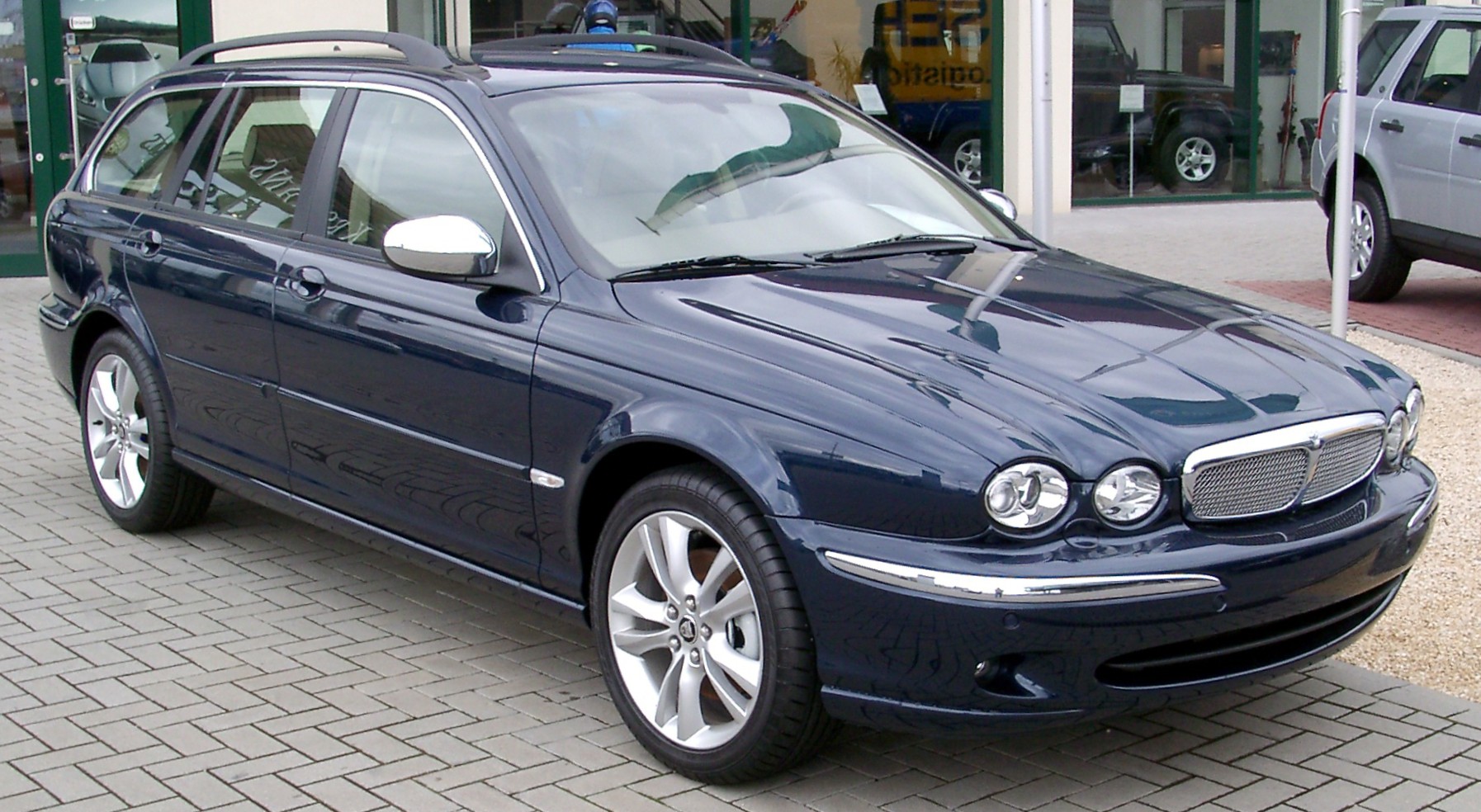
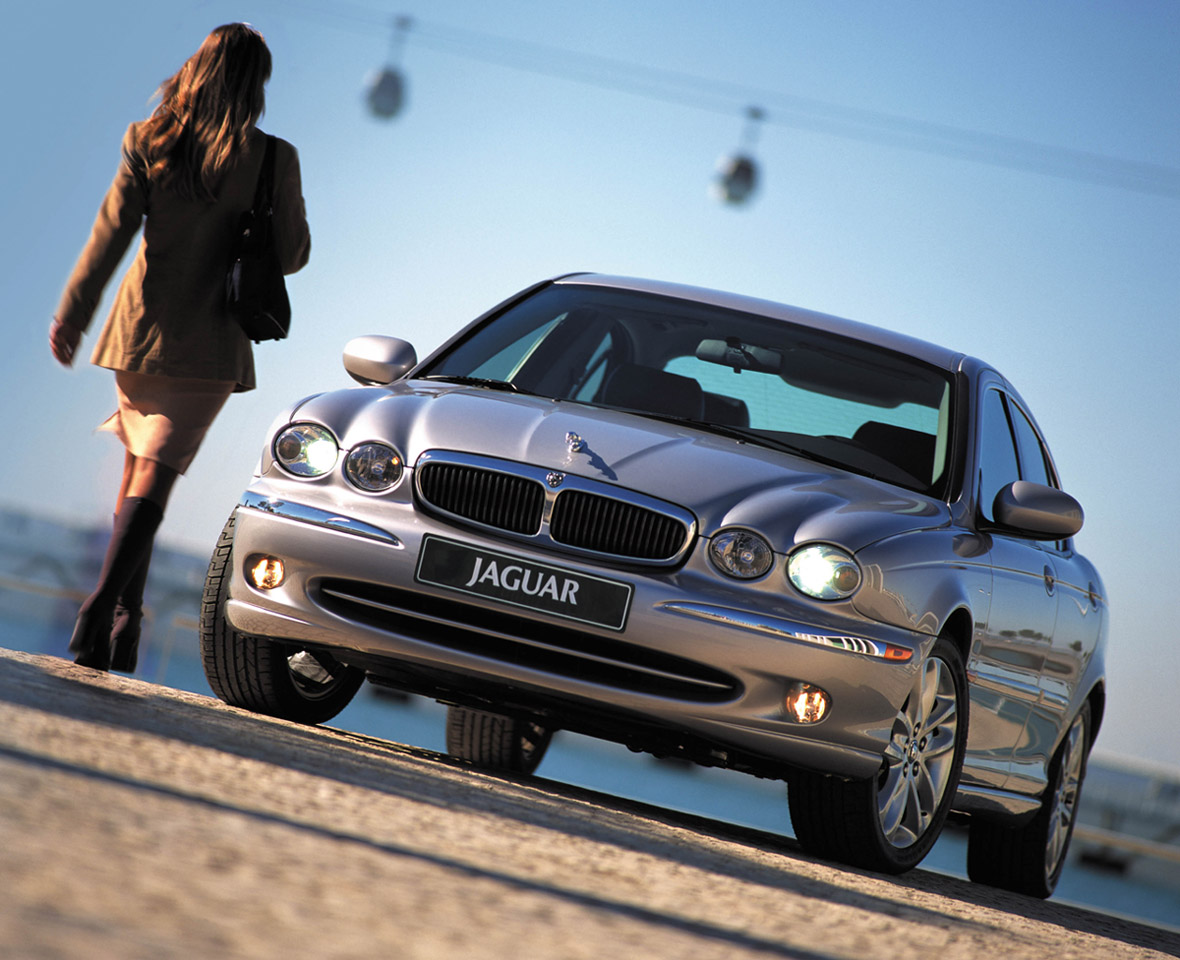
Throughout the 1970s Jaguar had been developing "Project XJ40" which was an all-new model intended to replace the original XJ6. Due to problems at British Leyland and the fuel crisis, the car was continually delayed. Proposals from Jaguar's in-house designers and Pininfarina were received. Eventually, it was decided an internal design would be carried through to production and in February 1981 the BL board approved ₤80 million to produce the new car, however by the launch over ₤200 million had been invested.In 1989, under Ford control, the model range was revised with the deletion of the 2.9 L engine, replaced at the low end by a twin-cam 3.2 L version. The 3.6 L was upgraded to 4.0 L. The most obvious interior improvement was replacement of the often unreliable digital dashboard with conventional analogue instruments. In 1994 the XJ6 received a passenger's side airbag which meant the loss of the in-dash glove box.With the design alteration of the XJ40 engine compartment finally completed, the XJ81 or XJ12 saloon reached the market in 1993 and continued until the end of the 1994 model year. The 1993 - 1994 XJ12 Vanden Plas cars marked the introduction of the 6.0L V12 and four speed automatic transmission in the four door saloon. The new four speed automatic transmission in these cars was based on the GM 4L80E and featured an overdrive fourth gear for extended cruising comfort. The 1993 XJ12 cars that entered the United States were titled as 1994 cars. L'année de sa production : 1993 et son lancement 1993-1994. The primary differentiation between these early 1994 cars and the later 1994 cars is the presence of a in-dash glove box in the early cars that was replaced by a passenger's side airbag in the later 1994 cars. The V12 cars also had a latice or BBS style wheel and body coloured grille vanes.With an all-new replacement still years away, in the early 1990s Jaguar recognised the boxy 1980s lines of the XJ40 needed to be facelifted and decided a "retro" path was the way forward. This path worked as Jaguar's biggest markets, the Americans, the Germans and the Japanese all associate Jaguars with sleek, voluptuous and taut feline curves. This revamp reintroduced many styling cues of the popular original XJ series. The X300, as it was known, was based on the XJ81 chassis, designed by chief Jaguar designer Geoff Lawson and was launched as the XJ6 for the 1995 model year.According to the UK Department for Transport's road accident statistics on a model-by-model basis (Table A, Page 10), which shows risk of injuries to car drivers involved in two-car accidents whenever an injury is reported, the X300/X308 series Jaguars were among the safest cars on UK roads (measured in terms of chance of death in an accident during the four year assessment period) – three times safer than the safest Volvo models and matched only by the Mercedes-Benz S-Class. This publication presents estimates of the risk of driver injury in popular models of car, if they are involved in a two car injury accident. It does not address issues of primary safety and gives no information on whether or not specific makes of car have different risks of being involved in an accident. The statistics are based on personal injury road accident data reported to the Department for Transport by police forces within Great Britain.In September 1994, the XJ12 got the same styling revisions as the X300 XJ6. The 6.0 L Jaguar V12 engine offered 318 bhp (237 kW; 322 PS) and was continued for the 1995 model year mechanically similar to the 1994 XJ81 car, with a notable switch from forged to chill cast crankshaft. From 1995 on, the engine used a distributorless Nippon Denso electronic management system. The top aluminum cover in the V valley was redesigned to house two packs of 3 coils each, with each coil having two high tension terminals for a total of 12. These coilpacks were driven by two Denso ignition modules, which are very similar to Ford EDIS-6 units.For the 1995 model year, a supercharged version of the AJ16 engine was offered in an XJ badged as the XJR, and given the X306 designation. It is also known as the "XJR6", which helps to differentiate it from the later V8-powered XJR. This was the first supercharged Jaguar in the company's history and only the second car Jaguar ever made that used forced induction (the other being the turbocharged Jaguar XJ220 sports car.)A single 2-door XJ convertible was built in 1996 to commemorate Daimler's centenary. The concept car, called the Daimler Corsica, was based on the Daimler Double-Six saloon and can seat four. The prototype, which lacked an engine, had all the luxury features of an XJ saloon, but a shorter wheelbase. It is painted in a now-discontinued colour called "Seafrost." The Daimler Corsica was named after the 1931 Daimler Double-Six Corsica. The concept was a one-off, and may have been intended for limited production beginning in 1997. The car has made a limited number of appearances at car shows and events since 1996. It has most recently appeared at the Belfast Sports Car Show in January 2004. The Daimler Corsica prototype is owned by the Jaguar Daimler Heritage Trust, who have decommissioned it to operate as a fully functional road-legal car. It is on display at their museum at Browns Lane in Coventry, England. The car was recently displayed at Harewood House as part of the Jaguar Enthusiasts' Club show.September 1997 saw the "Mark 2" XJ revised for a final time, and this time the car (known as X308) had changed more over the X300 than the X300 had done over the XJ40. The exterior styling which won the award of "L'Automobile piu Bella del Mondo" was mildly revised, the only real notable changes being new, shallower grille, bumpers incorporating oval front indicators & side reflectors with 1/4 chrome trims instead of the full width ones of the X300, as well as revised clear indicator rear light clusters and the fitting of modern clear lens projector headlamps. The CATS Computer Active Technology Suspension was also offered, which adapted the stiffness of the dampers to optimise ride comfort or handling. The passenger compartment was further strengthened by use of ultra high strength boron steel and the high speed crash survivability was further improved by incorporation of a unique "swans neck" design into the crumple zones.


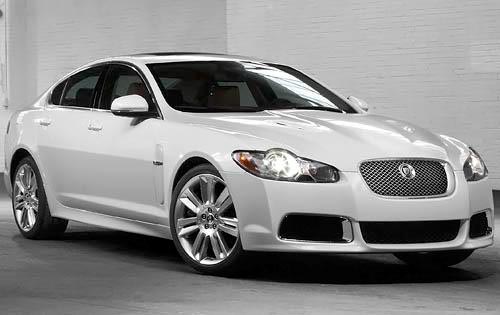
Although major revisions (through the X300 and, particularly, the X308 updates) kept the Mark 2 competitive in some areas against its rivals, the basic design dated back to 1986 which meant the car was being outclassed and losing ground to its rivals, many of which were now two generations advanced from the original competitors of the Mark 2 XJ. For example, since the model had been unveiled in 1986 (at the same time as the BMW 7 Series E32), BMW had launched Mark 3 (E38) and Mark 4 (E65) versions of its 7 Series in 1994 and 2001 respectively – all while Jaguar was still producing the Mk 2 XJ.The X358 is a face-lifted version of the X350, and was unveiled at the end of February 2006. Aesthetically, the main changes were a new lower grille system, with a deeper, more aggressive gape, and side air vents added similar to those introduced on Ian Callum's 2005 XK. On the 9th July the newly styled XJ was unveiled at the Saatchi Gallery in London, with Jay Leno and Elle Macpherson unveiling the new car. The unveiling was broadcast live on the Jaguar website. In keeping with Ian Callum's new design direction for Jaguar, it is an all-new exterior design and a break from the XJ series mould carried over on all previous generations. It is a longer, wider car that looks much bigger than its predecessor.The front has clear links with the executive car XF, although with slimmer, sleeker lights and a larger, squarer grille and more aggressive appearance. The rear is the contentious part, like nothing Jaguar has shown before. The upright, swooping taillights, nicknamed 'cat's claws', and black roof panels each side of the rear screen, which aim to hide the XJ's width, are the most striking aspects. There is also a standard full-length sunroof, that extends all the way back with just a single body-coloured roof panel that the designer likens to bridges on yachts. The new XJ features innovative, all-LCD dashboard and console displays. The former can be configured to display various virtual dials in addition to the obligatory speedometer, whereas the latter presents different views to the driver and passenger, including control of a sophisticated video and audio system. Mike Cross, one of the company's Chief Engineers, spoke more about the new Jaguar XJ dynamics in an interview with Autocar. Like several of its predecessors the X351 will be available with both standard and long wheelbase as well as many special editions. Engines are modern units, already seen in other JLR products: the five litre petrol V8 either normally aspirated or supercharged, or a twin-turbo three litre diesel which is predicted to account for most of the sales.
 Jaguar C-X75 is a plug-in hybrid, two-seat, concept car from Jaguar which debuted at the 2010 Paris Motor Show. The C-X75 produces 778 horsepower through four electric motors, each of which drives one of the four wheels. The batteries driving these motors are recharged using two diesel-fed micro gas turbines instead of a conventional four-stroke engine. The C-X75 was named in honor of Jaguar’s 75th anniversary, the C stands for concept and the X for experimental. In terms of performance, Jaguar envisions future super cars reaching 330 km/h (205 mph) and accelerating from 0 to 100 km/h (0 to 62 mph) in 3.4 seconds and 80 to 145 km/h (50 to 90 mph) in 2.3 seconds. It is powered by four 145 kW (194 hp) electric motors – one for each wheel - which produce 780 hp (582 kW) and a total torque output of 1,600 N·m (1,180 ft·lbf). Inherent in the drivetrain is the ability to independently vector torque to each wheel across the full speed range. The micro gas turbines developed in a partnership with Bladon Jets generate enough electricity to extend the range of the car to 900 km (559 mi) while producing 28 grams of CO2 per kilometre on the EU test cycle. While running solely on battery power, the C-X75 has an all-electric range of 110 km (68 mi). Among other advantages, the micro turbines used in the C-X75 can be run on a range of fuels including diesel, biofuels, compressed natural gas and liquid petroleum gas. Jaguar also focused on the aerodynamics in order to improve performance. For example, the carbon-fibre rear diffuser, an element in guiding airflow under the car and creating downforce, includes an active aerofoil and is lowered automatically as speed increases. Moreover, the C-X75 features an extruded and bonded, aerospace-inspired, aluminium chassis, saving on weight and improving sustainability and performance.
 Jaguar C-X75 With Turbo Speed
 Jaguar C-X75 Interior Concept
 Jaguar C-X75 Speedometer
 Jaguar C-X75 Top View
 Jaguar C-X75 Exotic Interior
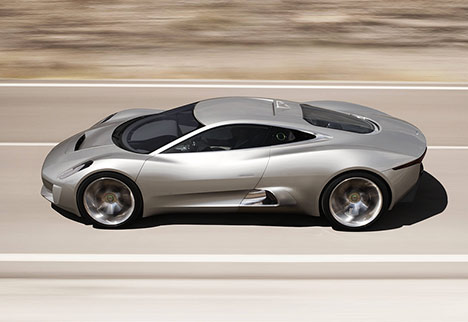 Jaguar C-X75 On The Road
 Elegant Jaguar C-X75